
Understanding New USCIS Discretionary Review Guidelines for 19 Countries
Authored by Wendy R. Barlow, Esq.
If you or a family member are a national of one of 19 specific countries, a recent shift in U.S. Citizenship and Immigration Services (USCIS) policy may significantly impact your immigration journey. On November 27, 2025, USCIS issued updated guidance that gives officers broader authority to use “discretionary analysis” when deciding on a wide range of request for immigration benefits including requests for extension, amendment, and change of nonimmigrant status and adjustment of status.
Essentially, meeting the basic legal requirements for a request might no longer be enough for an automatic approval. Adjudicators are now instructed to look deeper into an applicant’s background to weigh positive and negative life factors.
What Countries Are Affected?
This enhanced screening applies to individuals from 19 countries identified in Presidential Proclamation 10949. Importantly, even if you are a dual national of a country not on this list, you are still subject to this vetting if you were born in one of the following nations:
| Full Review Countries | Partially Banned Countries* |
| Afghanistan, Burma (Myanmar), Chad, Republic of Congo, Equatorial Guinea, Eritrea, Haiti, Iran, Iraq, Libya, Somalia, Sudan, Yemen | Burundi, Cuba, Laos, Sierra Leone, Togo, Turkmenistan, Venezuela |
What Does “Discretionary Analysis” Mean?
In the past, the use of “discretion”—where an officer decides if you “deserve” the benefit—was mostly limited to specific cases like National Interest Waivers (NIW). Now, this analysis has been extended to:
-
Extensions of Status
-
Amendments to existing visas
-
Changes of Nonimmigrant Status
-
Adjustment of Status (Green Card applications)
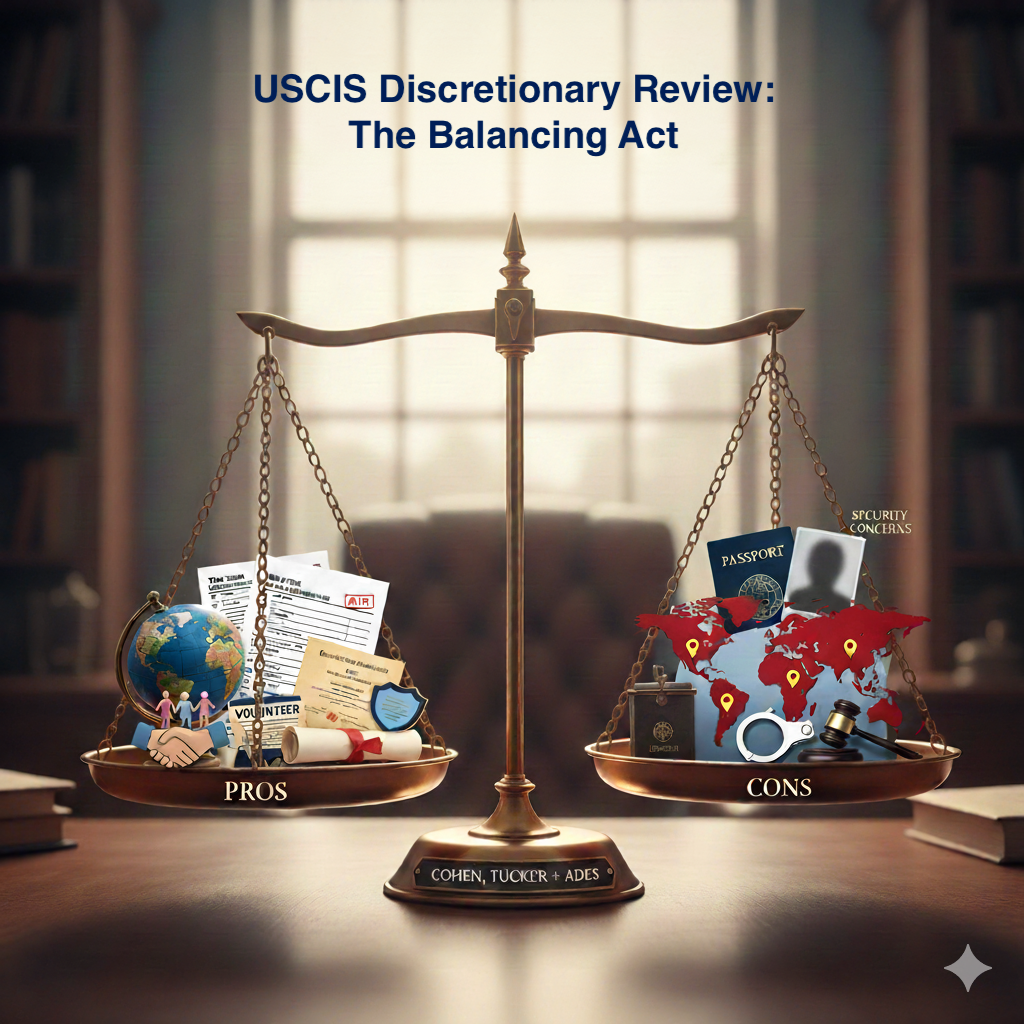
The Balancing Act: Positive vs. Negative Factors
Officers are instructed to weigh the “totality of the circumstances”. Here is what they are looking for:
Positive Factors (The “Pros”)
- Family Ties: Strong family connections within the United States.
- History of Compliance: Long-term lawful presence and following all immigration laws.
- Economic Contributions: A stable employment history and paying taxes.
- Community Ties: Volunteer work, community service, or business ownership.
- Personal Character: Awards, letters of support, or evidence of trustworthiness.
Negative Factors (The “Cons”)
- Identity Issues: Use of aliases or inability to verify who you are.
- Security Concerns: Any perceived threat to national security or public safety.
- Criminal History: Even if there was no formal conviction, criminal history can be a factor.
- Country of Origin: Being from a country with strained diplomatic relations with the U.S. or one associated with terrorism.
How to Prepare Your Application
Because the “weight” given to any single factor is up to the individual officer, preparation is key. We recommend a proactive approach to avoid delays or denials:
- Gather Evidence Early: Do not wait for a Request for Evidence (RFE). Collect tax filings, employer letters, and records of community involvement now.
- Review Online Activity: Be aware that passive online activity or certain affiliations may be scrutinized under this new “discretionary lens”.
- Consult with Experts: Because a new Proclamation is set to expand travel ban lists and adjust exceptions on January 1, 2026, staying informed is critical.
At Cohen, Tucker + Ades, we are closely monitoring how the USCIS Operations Committee implements these changes. We can help you perform a case-by-case analysis to determine whether to submit your “positive factor” evidence with your initial filing or keep it in reserve.
Disclaimer: This blog post contains general information and is for informational purposes only. It is not legal advice and does not create an attorney-client relationship between you and Cohen, Tucker + Ades P.C. Immigration laws and fee schedules are subject to frequent change. The information provided herein may not reflect the most current legal developments. You should not act or refrain from acting based on information contained in this post without seeking professional counsel from an attorney licensed in your jurisdiction. Cohen, Tucker + Ades P.C. expressly disclaims all liability in respect to actions taken or not taken based on any or all of the contents of this post.
Sources:
Not sure which option is right for you? Request a confidential consultation today.